


Noise in Nivona coffee machines — when it is normal and when it needs repair
Every automatic coffee machine makes some noise while it works. Grinding coffee, running the pump and the rinse cycle are noisy by nature. Under normal conditions a Nivona CafeRomatica runs at 60-70 dB while grinding, about as loud as a normal conversation. The problem starts when the noise clearly rises, changes character, or new sounds appear that were not there before — humming, clicks, metallic squeals or strong vibration. At the AGD Group workshop in Lodz, excessive noise in Nivona machines accounts for about 12% of all service calls.
It helps to note at which stage the noise appears. Sound during grinding points to the grinder, loud running while brewing points to the pump or the thermoblock, and clicks when the machine switches on or off point to the brewing unit. That information is very useful to a technician and shortens diagnosis considerably.
A loud pump — humming and vibration while brewing
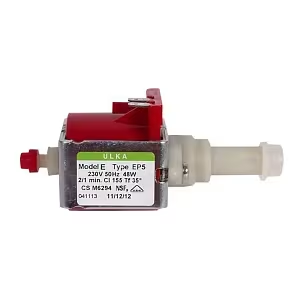
Worn ULKA pump
The ULKA (or Invensys) vibration pump fitted in Nivona CafeRomatica machines works as an electromagnet that drives a piston back and forth at mains frequency (50 Hz). Over time the internal parts — the diaphragm, piston and seals — wear out, and the pump gets louder. A worn pump makes a distinctive low, pulsing hum, clearly louder than on a new machine. A ULKA pump in a Nivona machine lasts about 4-6 years with daily use (5-10 coffees a day). On the Nivona CafeRomatica 793 and 820 the manufacturer fitted a higher-output pump that is slightly louder by design — owners of these models often worry about a noise level that is perfectly normal.
Air in the hydraulic system
Air in the hydraulic circuit causes a distinctive, intermittent pump sound — instead of a steady hum you hear a "rattle" or a "gulp". The pump is trying to push a mixture of water and air, which creates uneven vibration. This often shows up after the machine has stood unused for a while, after the water tank has been removed and refitted, or after descaling. The fix is simple: dispense hot water several times for 15-20 seconds to flush the air out of the system.
Scale in the thermoblock
Limescale building up inside the thermoblock narrows the water channel. The pump then has to work at higher pressure, so it runs louder and you hear a characteristic hiss (a whistle) as water passes through the narrowed channel. When scale buildup is severe, the pump runs at the limit of its capacity, which wears it out faster. Descaling a Nivona machine every 2-3 months is the most effective way to prevent this.
A loud grinder — clicks, squeals and metallic sounds
A foreign object in the grinder
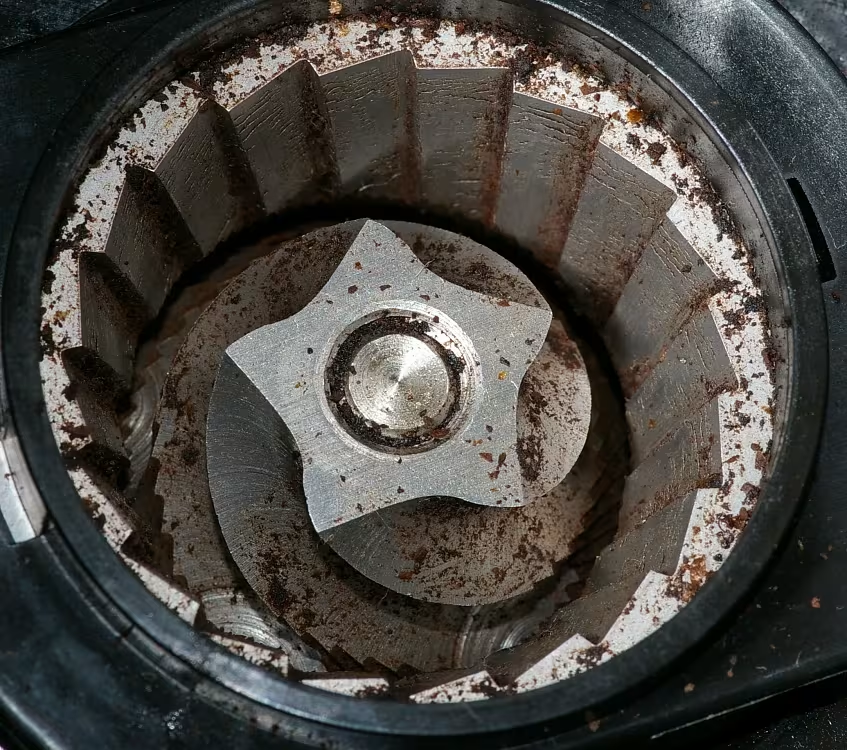
The ceramic grinder (steel in older models) in Nivona machines is sensitive to foreign objects that can slip into the bean hopper with the coffee beans. Stones, bits of wood, pieces of packaging or even a seed from another plant can cause a loud crack or a metallic squeal while grinding. In the worst case the object damages the burr surface, and the grinder stays louder for good. If you hear a sudden, unusual sound, switch the machine off at once and empty the bean hopper. That is where you should find and remove the cause.
Worn grinder burrs
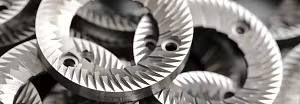
Ceramic burrs in Nivona machines last about 10,000-15,000 brewed coffees. Once they wear out, they grind unevenly and make a louder, rougher sound. Instead of a steady whir you hear a "crunch" or a "scrape". Another sign is a change in grind size: it becomes uneven, and the drink loses flavor and aroma. At AGD Group we replace the burrs with original Nivona parts, which brings the grinder back to the quiet running it had from the factory.
A loose grinder housing
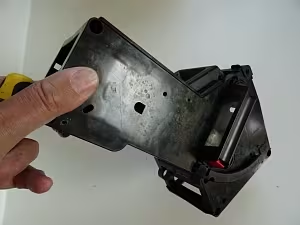
In Nivona machines the grinder sits in a plastic housing that can work loose over time from vibration. A loose housing resonates while grinding, amplifying the sound and sending extra vibration through the whole machine body. This is a fairly easy repair: tighten the mounting screws or replace worn damping parts. On Nivona CafeRomatica 7xx models the grinder housing has extra sound dampening from rubber pads, which harden over time and lose their damping effect.
Housing vibration — causes and fixes
A loose brewing unit
The brewing unit in Nivona machines can be taken out of its slot — it is held in place by latches. Over time the latches wear and the unit starts to sit loosely. While coffee is brewing, water passes through the unit at 9-15 bar, and a loose unit produces vibration and clicks. The symptom is knocking or clicking during the brew cycle. The fix is to check that the unit is seated properly: take it out, clean both the unit and the slot, then slide it back in until the latch clicks firmly.
An unstable surface
It may sound trivial, but an unstable surface under the machine is a surprisingly common cause of excess vibration. A Nivona machine weighs 8-10 kg, and the pump sends out vibration that a kitchen counter can amplify — especially a thin laminate worktop. The fix is an anti-vibration mat under the machine, or moving it to a more stable surface. Also make sure all four feet sit evenly on the surface.
A whoosh during rinsing — is it normal?
The rinse cycle on Nivona machines starts automatically when the machine is switched on and before it switches off. During rinsing the pump pushes water through the system without brewing coffee, which makes a characteristic whoosh. This is completely normal and does not need a service visit. The problem starts when the rinse noise becomes much louder than before, or when rattling comes with it — then look for air in the system or scale in the thermoblock.
Nivona models known for running louder
The Nivona CafeRomatica 793 and 820 use a stronger, higher-output pump that is a little louder by design. Owners of these models, especially if they previously used a 5xx or 6xx machine, may find the difference worrying. In fact it is a normal feature of these machines. Pump noise on the 793 and 820 is about 65-72 dB, compared with 60-67 dB on 5xx/6xx models. If the noise clearly exceeds these levels, or if its character changes over time, it is worth having the machine checked by a workshop.
Cost of repairing a noisy Nivona coffee machine
Repair costs for noise problems on Nivona CafeRomatica machines at AGD Group in Lodz:
- Diagnostics — 70 PLN (included in the repair cost)
- ULKA/vibration pump replacement — from 220 PLN
- Rotary pump replacement (premium models) — from 350 PLN
- Grinder burr replacement — from 160 PLN
- Removing a foreign object from the grinder + cleaning — from 100 PLN
- Brewing unit mount repair — from 90 PLN
- Professional thermoblock descaling — from 120 PLN
We give an exact quote after diagnosis. We start the repair only once you approve it.
A typical noise repair on a Nivona machine starts from 170 PLN. The pump is the part replaced most often (about 40% of cases), followed by the grinder burrs (about 25% of cases). Every repair comes with a 3-month service warranty.
Prevention — how to keep a Nivona machine quiet
To keep a Nivona machine quiet for many years, descale it every 2-3 months (this protects the thermoblock and the pump), use a Nivona Claris filter (it cuts scale buildup by 80-90%), clean the brewing unit every week (this stops it sitting loose), use coffee free of stones and foreign objects (buy from trusted suppliers), and grease the brewing-unit guide rails with silicone grease every 200 brewed coffees. These simple steps greatly extend the life of the pump, the grinder and the brewing unit.
Cennik i specyfikacja usług
Podstawowe parametry usługi
| Czas trwania | 3-7 dni w zależności od kolejki |
| Gwarancja | 3 Mies. |
Dodatkowe informacje
Wszystkie usługi serwisowe wykonywane są przez wykwalifikowanych techników z wieloletnim doświadczeniem.
Popularne usterki — naprawa w Łodzi
Najczęściej zgłaszane awarie ekspresów do kawy w serwisie AGD Group. Sprawdzenie od 70 PLN, naprawa zwykle 2–3 dni robocze.
Nivona service in Łódź
Nivona coffee machine repair at the independent after-warranty workshop AGD Group in Łódź. Genuine parts, diagnostics from €16, usually completed in 2–3 business days.
AGD Group is an independent after-warranty service — we are not an authorised manufacturer service centre.
- Address
- aleja Włókniarzy 234A, 90-556 Łódź
- Phone
- +48 459 568 444
- Hours
- Mon–Fri 9:00–19:00 (Sat–Sun closed)
- info@agdgroup.pl